THE BEAUTY OF MATHEMATICS 5

Another photo depicting the use of mathematics in architecture.

12-POINT PUZZLE

Your goal is to connect the dots using 5 straight lines only.

HAPPY HOLIDAYS

A holiday greetings from REALM OF MATHEMATICS

THE BEAUTY OF MATHEMATICS 4

This is the fourth photo depicting the beauty and use of mathematics on famous places.

THE BEAUTY OF MATHEMATICS 3

This is the third photo depicting the beauty and use of mathematics on famous places.

THE BEAUTY OF MATHEMATICS 2

This is the second photo depicting the beauty of mathematics in our surroundings.

THE BEAUTY OF MATHEMATICS 1

This is the first of the series of photos appreciating math in the world.

THE MATHEMATICS OF LIFE

This is the reality of life.

HAPPY 40th ANNIVERSARY RUBIKS CUBE

This day is the 40th anniversary of the Rubik's cube, which was first introduced in Hungary.

LEARN AT MATHEMATICS REALM

This is the extension of the mathematics realm blog. It contains math lessons, tutorials, downloads, etc.

SYMMETRY AND TRANSFORMATION

A work of art depicting symmetry and transformation.

HAPPY HOLIDAYS 2013!

A greetings from Realm of Mathematics and Learn at Mathematics Realm!

BLOG ACTION DAY 2013

I have already registered. COme and join us!

MATH ARTS 4

Another figure being formed by transformation.

MATH QUOTES 1

A very famous quotation about math.

MULTIPLES OF 9 PATTERN

A very simple pattern found on the multiples of 9.

MATH ARTS 3

Another figure being formed from symmetrically rotated and transformed picture of a famous mall in Jakarta.

NUMBER PUZZLE 2

A very simple number puzzle you would definitely like. One is explained well and the other is given for you to try. Good luck!

MATH ARTS 2

This images are created from a symmetrically rotated and transformed picture.

MATH ARTS 1

This is a simple art created by using circles of different sizes and colors.

NUMBER PUZZLE

This is a simple puzzle involving a pattern of numbers. Try to decipher the pattern and find the missing numbers.

BIG NUMBER PUZZLE

This is a simple puzzle of creating the largest possible number using the indicated numbers and symbols

CUBE COUNTING 2

This is the second part of the cube counting series. Just count the number of cubes being used in the figure.

LEARN AT MATHEMATICS REALM

This is an extension of the mathematics realm blog. It provides information, lessons and tutorials on specific topics from different areas of mathematics.

HOLY WEEK 2013

A simple mathematical statement that means a lot.

BIBLICAL NUMBERS

This are the first ten biblical numbers. What do they represent?

CONNECTING DOTS WITH LINES

This is one of the most common math puzzles. It involves connecting dots using a specified number of lines and following some conditions

A MAN IS LIKE A FRACTION

A math quotation to think about.

TRIANGLE COUNT

A simple problem that tests your patience and accuracy in counting.

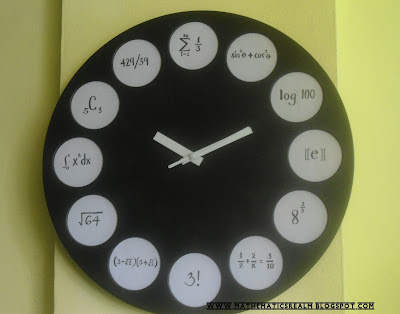
MATH CLOCK

A clock showing different expressions from different areas of mathematics

MULTIPLYING NUMBERS BY 5

A technique in getting the product of any number and 5

CURVES FORMED FROM STRAIGHT LINES

These are curves approximated by the series of straight lines. You can test your creativity by forming a mathematical artwork using the curves.

HOW TO DIVIDE A SQUARE INTO FOUR EQUAL PARTS

These are some of the ways on how to get four equal parts in a square.

CUBE COUNTING

Count the number of smaller cubes in each figure.

SQUARING NUMBERS NEAR 100 (Case 2)

Second part of two cases. This is the easiest way to square a number near and greater than 100.

SQUARING NUMBERS NEAR 100 (Case 1)

First part of two cases. This is the easiest way to square a number near and less than 100.

MULTIPLYING NUMBERS BY USING LINES

The easiest way of multiplying numbers using parallel and intersecting lines.

THE COIN TRIANGLE PROBLEM

Rearrange the coin in a reversed triangular form.

THE VALUE OF MONEY

The value and limitations of money.

EARTH HOUR 2012!

This is to promote for the Earth Hour 2012 on March 31, 2012. Read more for details...

MATHEMATICAL WAY OF SAYING I LOVE YOU!

A math inequality problem leading to the word i love you!.

THE MISSING COIN PROBLEM

A problem about the missing coin used in daily activities.

THE 3 CATS, 3 MICE PROBLEM

A puzzle is about cats catching mice in a day.

DIGITAL CIRCLISM

See the beauty and use of circles in different artworks. Can you guess who are in the images?

THE SIGNIFICANCE OF 40 DAYS IN THE BIBLE

This is the list of significant events in the Bible that have been done in 40 days.

BASIC MATH QUIZ PART I (Decimals and Integers)

This will test your knowledge about basic concepts in mathematics, specifically on decimals and integers.

Year 2011

Notable dates that makes year 2011 amazing and special.

MATH TALK

A simple conversation of a couple integrating math in the talk.

MULTIPLYING NUMBERS BY 11

This is the fastest and easiest way to multiply numbers by 11.

SQUARING NUMBERS ENDING IN 5

This is the easiest way to square a number ending in 5.You can actually do this in seconds only!

PARALLEL LINES

Comparison between the definition of parallel lines in Euclidean Geometry and in Non-Euclidean Geometry.

MAZES

Aside from the usual form of mazes that we know, there are mazes that are computer generated, which also resemble some common objects or people.

DAYS OF THE MONTHS

This uses body parts to easily remember the exact number of days for every month of the year.

HOW FAR IS A STORM FROM YOU

A basic computation that can easily determine the distance of a storm from your location.

THE BIBLE CODE PUZZLE

A mathematical connection on the words that can be found in the Bible.

Showing posts with label multiplying numbers. Show all posts

July 21, 2013

MULTIPLES OF 9 PATTERN

patterns,sequences,numbers,mathematics,algebra,arts
Let us recall the multiples of 9. 
nine,numbers,algebra,mathematics,sequences,patterns,tricks
Do you notice any pattern of the multiples? That is of course aside from the pattern of having 9 added to previous entries. To make it easier for us to look for patterns, let us separate the digits of the multiples.
nine,numbers,algebra,mathematics,sequences,patterns,tricks
Now, let us look at the leftmost digit of the multiple. Do you see any pattern now? Have you notice of any relation of the digits from the topmost until the bottom?
nine,numbers,algebra,mathematics,sequences,patterns,tricks
If you notice, the digits are in ascending order from 1 - 9. A very simple pattern.

Let us look at the rightmost digits. Do you see any pattern?
nine,numbers,algebra,mathematics,sequences,patterns,tricks
I know you have noticed that the rightmost digits are arranged in descending order from 0 - 9.

If we combine the patterns:
nine,numbers,algebra,mathematics,sequences,patterns,tricks

This applies to the next multiples of 9. A very simple patter that you could teach your students, friends, brother or sister. Hope you like it. 

Your comments and suggestions are welcome here. Just write them in the comment box below. Thank you! 

July 12, 2012

MULTIPLYING A NUMBER BY 5


There are a lot of shortcuts and techniques in multiplying numbers, you just have to choose what is easy for you. This time, let us try to multiply numbers by 5. 

If a number is multiplied by 5, you could divide the number by 2 then multiply it by 10. This is easier because when a number is multiplied by 10, just simply append zero(0) to the number. This technique is very effective if the number being multiplied by 5 is divisible by 2.

The reason behind this technique is that 5 is the result when 10 is divided by 2 or 10/2 = 5. It means that if you multiply a number by 5, you can multiply it first by 10 then divide it by 2 or you can divide it by two then multiply by 10. The latter is easier. 

Let us use it in the following examples:


      The first thing to do is divide the number by 2. That is
      After that, multiply the result by 10 or simply append zero (0) on the result. That is
      Therefore, 


      Divide 186 by 2. 

     Multiply the result by 10.
    Therefore,

Now try these:
1. (56)(5)
2. (102)(5)
3. (258)(5)
4. (364)(5)
5. (273)(5)

May 19, 2012

SQUARING NUMBERS NEAR 100 (Case 2)

Here is the second part of the method of squaring a number near 100.

 Number Near and Greater than 100


Example 1: Find the square of 101.
          step 1. Find the difference of the given number and 100. That is 101 - 100 = 1.
          step 2. Since the number is greater than 100, add the result in step 1 to the given number.
       step 3. Square the result in step 1. The square of 1 is 1.
         step 4. Combine the result in step 2 and 3. The first three digits from the left will be from   
                        the result in step 2 and the other two digits will be from the result in step 3.
                 Since the result in step 3 is a one digit number, add zero (0) to make it a two digit     
                       number. The number 1 becomes 01.
                      Therefore, the square of 101 is 10,201.

           Example 2: What is the square of 109?
                      step 1. Get the difference between the number and 100. That is 109 - 100 = 9.
                      step 2. Add the result in step 1 to the given number. That is 109 + 9 = 118.
                      step 3. Square the result in step 1. The square of 9 is 81.
                      step 4. Combine the results in step 2 and 3. That is 11881. 
                      Therefore, the square of 109 is 11,881.

         Try to find the square of the following numbers:
             1. 103
             2. 105
             3. 106
             4. 107
             5. 108  

May 18, 2012

SQUARING NUMBERS NEAR 100 (Case 1)

Last time, I have shared squaring numbers ending in 5. This time let us try to square numbers near 100 - those numbers less than 100 or numbers greater than 100.


Number near and less than 100.


Example 1: Find the square of 98.
      step 1. Find the difference of 100 and the number. That is 100 - 98 = 2.
          step 2. Since the number is less than 100, subtract 2 from the given number.
         step 3. Square the result in step 1. The square of 2 is 4.
         step 4. Combine the result in step 2 and 3. The first two digits from the left will be from   
                      the result in step 2 and the other two digits will be from the result in step 3.
                     Since the result in step 3 is only a one digit number, we need to add 0 to make it a 
                     two digit number. The result which is 4 becomes 04.
       
                     Therefore the square of 98 is 9,604.

    Example 2: Find the square of 91.
         step 1. Find the difference of 100 and the given number. That is 100 - 91 = 9.
         step 2. Subtract 9 from the given number. That is 91 - 9 = 82.
         step 3. Square the result in step 1. That is the square of 9 which is 81.
         step 4. Combine the results in step 2 and 3. The result is 8281.
                      Therefore, the square of 91 is 8,281.
  
   Try to find the square of the following numbers:
     1. 93
     2. 94
     3. 96
     4. 97
     5. 99


April 26, 2012

MULTIPLYING NUMBERS USING LINES

Here is a fun way to teach pupils and students how to multiply numbers using lines. You may represent each number by parallel lines then find their intersections. Some say that this is one of the methods used in Vedic Mathematics, a system of mathematics consisting of 16 sutras or aphorism.

Example 1:


STEP 1: Represent the first number by parallel lines. Separate the number of lines per digit. Each digit should represented by a group of line(s).


STEP 2. Represent the second number by parallel lines but in opposite direction as the first set of lines. The red lines represent the first number and the blue lines represent the second number. Take note of the intersections of the lines.


STEP 3: Group the intersections that are aligned vertically and count the number of intersections per group.


STEP 4: The number of intersections in each group represents the digits of the product.
Therefore,

What if the second group of numbers exceed 10? Let us have another example to illustrate this scenario.

Example 2:
Follow the same process as above. Steps 1 and 2.
Step 3:
 
Step 4:

Therefore

Now it's your turn to try this method of multiplying numbers. Try to answer the following in a clean sheet of paper:
1) 34 x 24
2) 35 x 51
3) 43 x 52
4) 36 x 63
5) 72 x 42

You can share this to your your younger brother or sister, to your cousins, to your friends, classmates...

Twitter Delicious Facebook Digg Stumbleupon Favorites More

 
$(function() { function highlight(){ $('.user.blog-author').closest('.comment-block') .css('border', '1px solid #0000FF') .css('background','FCFEA5 url("http://www.blogblog.com/1kt/transparent/white80.png")') .css('color', '#444444') .css('font-size', '12px') .css('padding', '10px'); } $(document).bind('ready scroll click', highlight); });